.png)

Top 6 Benefits of Salesforce for Nonprofits to Drive Social Good
Updated: Dec 17, 2025
This is the reality for most nonprofit organizations today. Whether you are fighting climate change, providing disaster relief, or supporting local education, the pressure to demonstrate measurable impact is higher than ever. Donors want transparency, volunteers want seamless experiences, and your board wants data-backed results.
Yet, many nonprofits are still stuck operating with spreadsheets, disconnected email tools, and legacy databases that don't talk to each other. This fragmentation leads to "data silos," where fundraising teams don't know what program teams are doing, and valuable opportunities to engage supporters are lost.
We believe technology shouldn't be a burden, it should be a multiplier for your mission. In this guide, we explore how Salesforce for Nonprofits (formerly Nonprofit Cloud) is revolutionizing the sector and the top 6 benefits that can help your organization drive more social good.
The Shift: From "Database" to "Mission Control"
Salesforce is no longer just a CRM for sales teams. With the Nonprofit Success Pack (NPSP) and the new Nonprofit Cloud, it has evolved into a complete operating system for social impact. It connects everything, fundraising, program management, marketing, and grants into a single source of truth.
Here are the top 6 benefits of implementing Salesforce for your nonprofit.
1. A 360-Degree View of Constituents
In the past, a "donor" was just a name in a fundraising spreadsheet. In Salesforce, that person is a constituent with a rich history. You can see that "Sarah" isn't just a one-time donor; she is also a volunteer, a newsletter subscriber, and an attendee at your last gala.
Why this matters:
Hyper-Personalization: You can tailor your communication based on the entire relationship. Stop asking active volunteers to "get involved" and start thanking them for the 10 hours they served last week.
Relationship Mapping: Tools like NPSP allow you to map relationships between people (households) and organizations (corporate sponsors), giving you a clearer picture of your networking potential.
2. Automated Fundraising & Grant Management
Administrative fatigue is real. Nonprofits often spend more time entering data than building relationships. Salesforce nonprofit implementation allows you to automate the tedious parts of fundraising.
Workflow Automation: Automatically send tax receipts and thank-you emails the moment a donation is received online.
Recurring Giving: easily manage monthly sustainers without manual tracking.
Grant Tracking: Never miss a deadline. Salesforce can track grant deliverables, application statuses, and reporting dates, sending reminders to your team before they become urgent.

3. Real-Time Program & Outcome Management
For years, nonprofits measured success by "dollars raised." Today, success is measured by "impact delivered." Salesforce’s Program Management Module (PMM) allows you to track beneficiaries, services delivered, and outcomes achieved in real-time.
The Benefit: Instead of scrambling to compile an impact report at the end of the year, you have a live dashboard showing exactly how many meals were served, how many students were tutored, or how many trees were planted. This data is gold when applying for new funding or reporting to the board.
4. Streamlined Volunteer Management
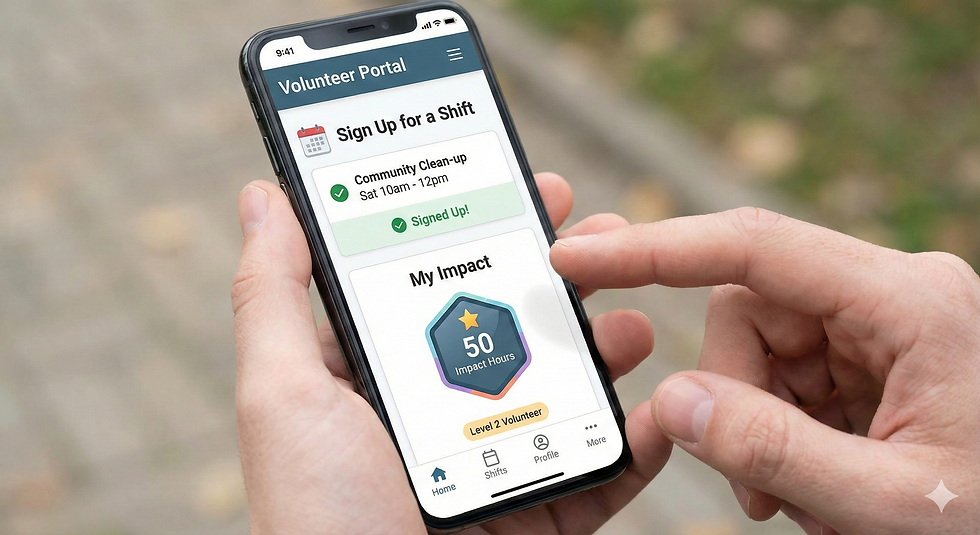
Volunteers are the lifeblood of many nonprofits, but coordinating them can be a logistical nightmare of endless email chains. Salesforce simplifies this with Volunteers for Salesforce (V4S).
Self-Service Portals: Using Salesforce Experience Cloud, you can build a branded portal where volunteers can view open shifts, sign up, and log their own hours.
Skill Matching: Need a photographer or a legal expert? Search your database for volunteers with specific skills to ensure the right people are in the right roles.
5. Data-Driven Decision Making (Reporting & Analytics)
"Gut feeling" is no longer enough to steer a nonprofit. You need data. Salesforce offers some of the most powerful reporting capabilities on the market.
With customizable reports, you can answer critical questions instantly:
Which fundraising campaign had the best ROI?
What is our donor retention rate year-over-year?
Which programs are underperforming?
Cloud Science Labs specializes in configuring these dashboards so that Executive Directors can see the health of the entire organization at a glance, without needing to ask IT for a report.
6. Future-Proof Scalability & AI
The beauty of Salesforce is that it grows with you. You might start with just donor management, but as you grow, you can easily add Marketing Cloud for advanced email journeys or Einstein AI for predictive insights.
New for 2025: With tools like Einstein for Nonprofits, AI can now help you draft grant applications, predict which donors are likely to lapse, and even suggest the optimal ask amount for a specific donor. By investing in Salesforce now, you are future-proofing your mission against technological obsolescence.
Conclusion
Technology alone cannot solve the world’s problems, but it can empower the people who are trying to. By adopting Salesforce, your nonprofit can reduce overhead, increase transparency, and ultimately, focus more resources on what matters most.
At CSL, we specialize in Salesforce implementation services tailored to the unique needs of nonprofits. Our experts help organizations set up, customize, and integrate Salesforce solutions that streamline operations and maximize impact. Whether you’re looking to strengthen donor engagement, improve program visibility, or enhance fundraising, our Salesforce consulting and implementation services ensure you get the most out of your CRM investment.


Comments